Paloma’s Pen: How to Write a Letter

TABLE OF CONTENTS
Dearest Quillson,
I do hope you're well. My heart felt so utterly frail when I heard about the perils you faced at Berncrest. Electromagnetic anomalies, vampiric encounters, voyeristic taxidermy! The entire tale made my skin prickle.
I know you're brave, but perhaps it's time for a sabbatical. A trip to the coast? You love the ocean air, and your nerves could use the rest. Of course, there's always a bed here for you—should you so choose.
Now, to a more perplexing matter. I almost feel silly bringing it up, but something about your last letter didn't sit well. To say it was short would be generous.
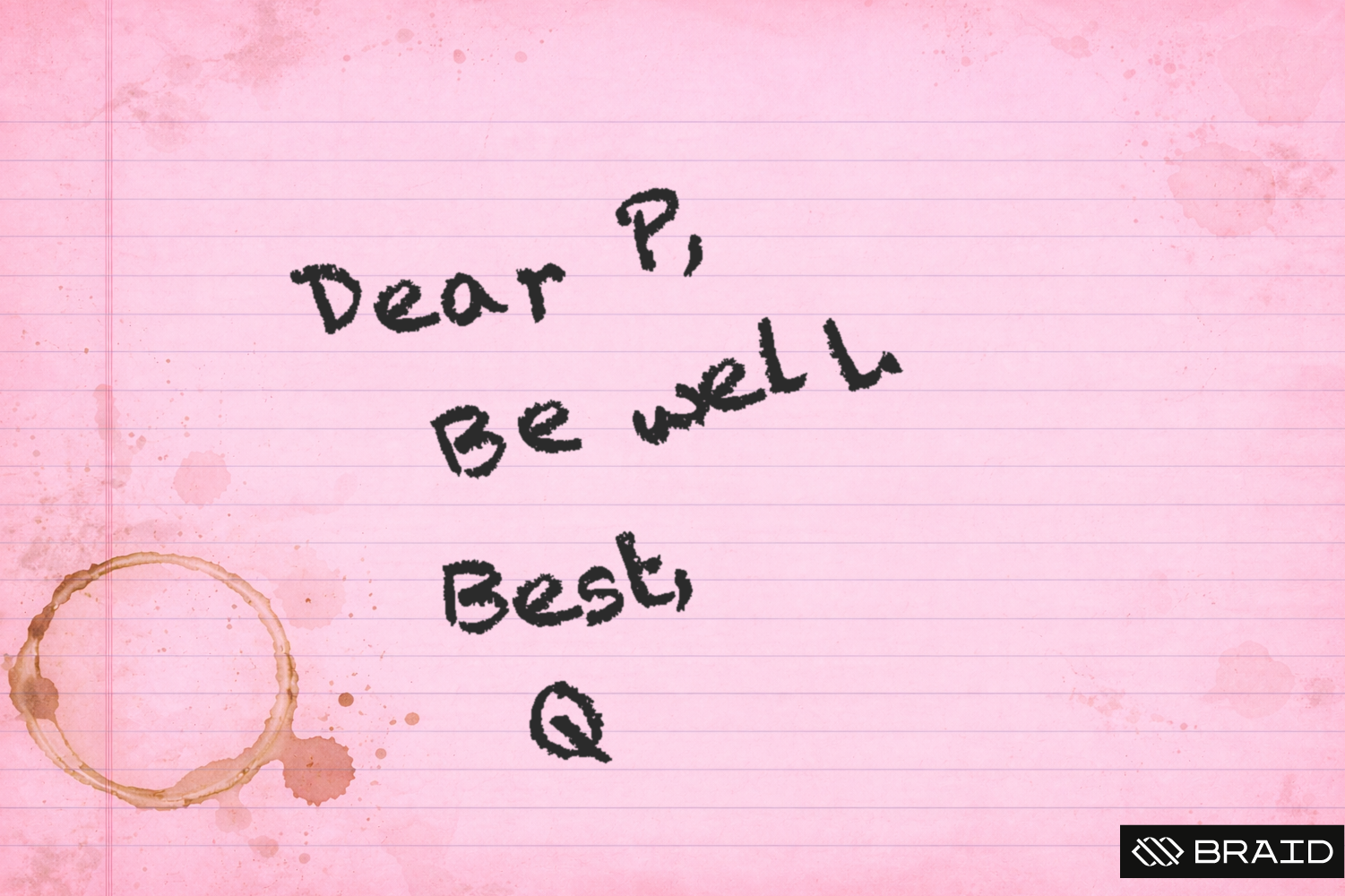
I know you're busy. I appreciate your devotion to your work. And yes, I know that sacrifices must be made. Believe me, I know. But I must confess that on first reading of your letter, a slight tremor of irritation overtook my arm and somehow sent your photo flying into the fireplace.
But then, as I sat there watching you smolder and turn to ash, I thought, "Of course! He's an investigator. He writes case files, not sonnets." And I realized you simply may not know how to write a letter, at least not in the conventional sense.
And so, dear Quillson, I will teach you all the essential elements of a proper letter. We'll examine:
Structure
Formatting
Body
Tone
Closing
Proofreading
By the end of this letter, you'll be thoroughly primed to write your next letter, which I am quite confident will be lengthier, more warmhearted, and, dare I say, affectionate?
But first, a most-urgent question: How do you start a letter? You offer a sincere greeting, preferably one that extends warmth, like a long (but not lingering) embrace, then quickly signal the meaning of your correspondence.
This, Quillson, is a courtesy that helps your reader quickly understand why your message deserves their attention and relieves them of the terrible burden of having to decipher your intentions.
Structure
Structure is your letter's backbone. It supports the entire message from start to close and gives your reader cognitive cues that make your words easier to absorb.
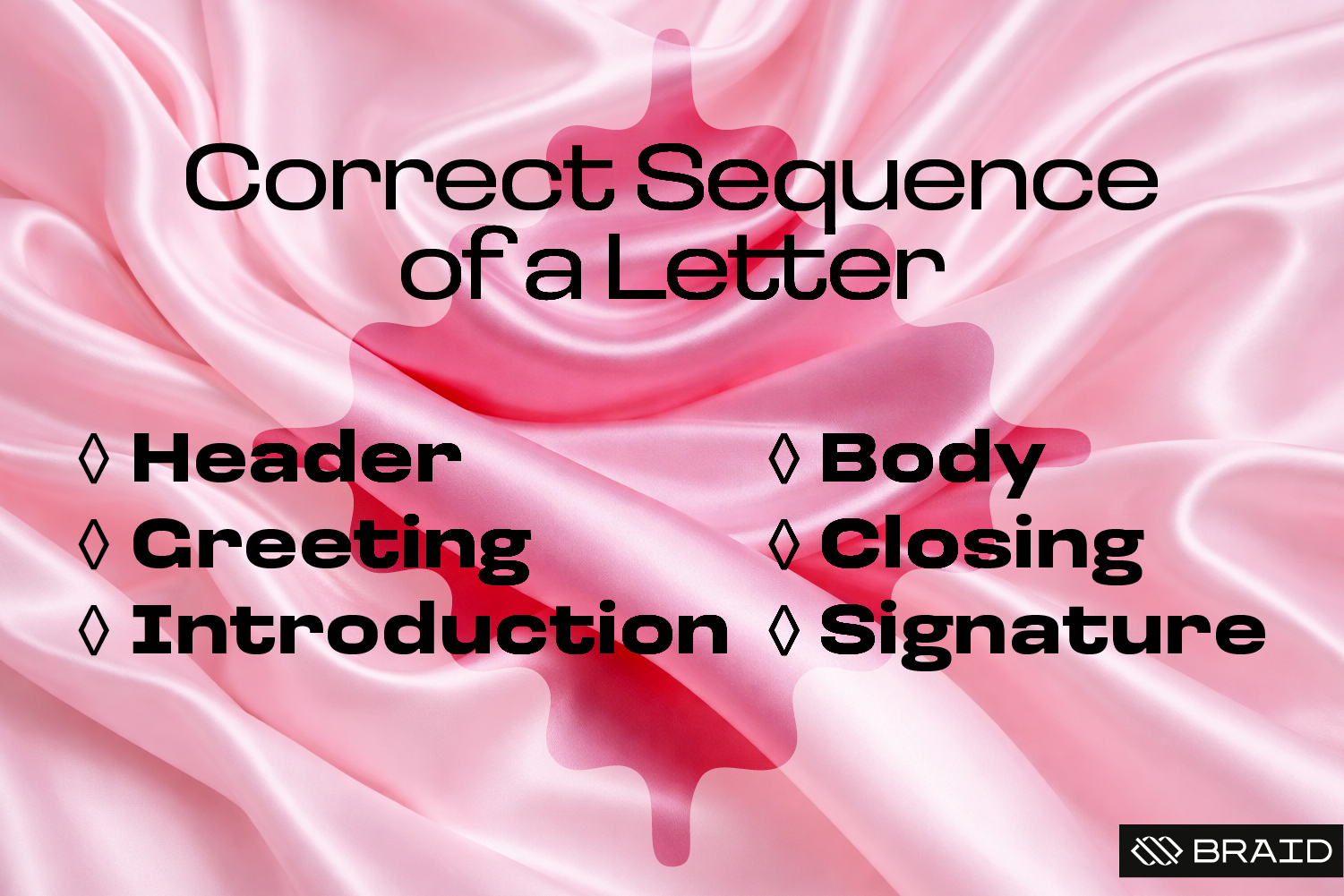
I suspect you'll ask, "What is the correct structure of a letter?" The standard sequence of a letter is:
Header
Greeting
Introduction
Body
Closing
Signature
Logical progression is paramount. This isn't a winding, paranormal mystery. Your reader needs to know why you're writing, what you NEED from them, and what the next steps are. I also find it's helpful to keep to one idea per paragraph and avoid all subtext—simply say what is on your heart.
Formatting
Having seen the tattered condition of your case files, I suspect this section will make you snarl, but you'll do well to remember I have no patience for bared fangs.
So, why does formatting matter? Formatting is a sign of respect. Left alignment, single spacing, clear margins, and legible fonts or penmanship show your reader you put time and effort into the letter.
Consistent spacing before and after paragraphs helps them scan each section with minimal effort. When your letter is well-formatted, you're saying, "I care about this relationship," and freeing your reader to revel in your lexical excellence.
Body
Judging by the blunt, "Be well," in your most recent letter to me, it seems you don't fully appreciate what goes into a letter's body.
What should be included in the body of a letter? The body is where you include information that helps your reader understand your wishes and respond accordingly. For instance, if a suitor were to write to his beloved, "I desire a life together," she might respond, "As do I."
Brevity is essential in the body as it lessens the chance of misinterpretation. You can further reduce ambiguity by using concrete nouns and verbs. And while I do love your use of metaphor, it's essential that you avoid rhetorical wandering and get to the point of your message.
Every unnecessary sentence dilutes urgency and delays what could be a blissful future.
Tone
I'll remind you that a letter isn't an incident report. You may think your writing is purely factual, but take off your investigator's hat for a moment and consider that your words do indeed influence the mood of your message. For instance, concision and clarity project confidence, but terse, choppy writing signals annoyance.
The existing relationship between sender and recipient also influences a letter's tone. If the sender is tender and loquacious in person but laconic via letter, the recipient may wonder if the sender's affections have cooled, despite the recipient's unwavering devotion to the sender.
Closing
How do you end a letter? The closing is where you erase all uncertainty and spell out what the recipient should do next. Include times, dates, and follow-up details when appropriate, or ask the recipient a clearly-worded question, or line of questions, that will guide their response letter.
A definitive conclusion removes doubt and confusion, and ensures future correspondence is amicable and productive. A tentative or altogether overlooked closing produces animus and jeopardizes the sender/recipient relationship.
Proofreading
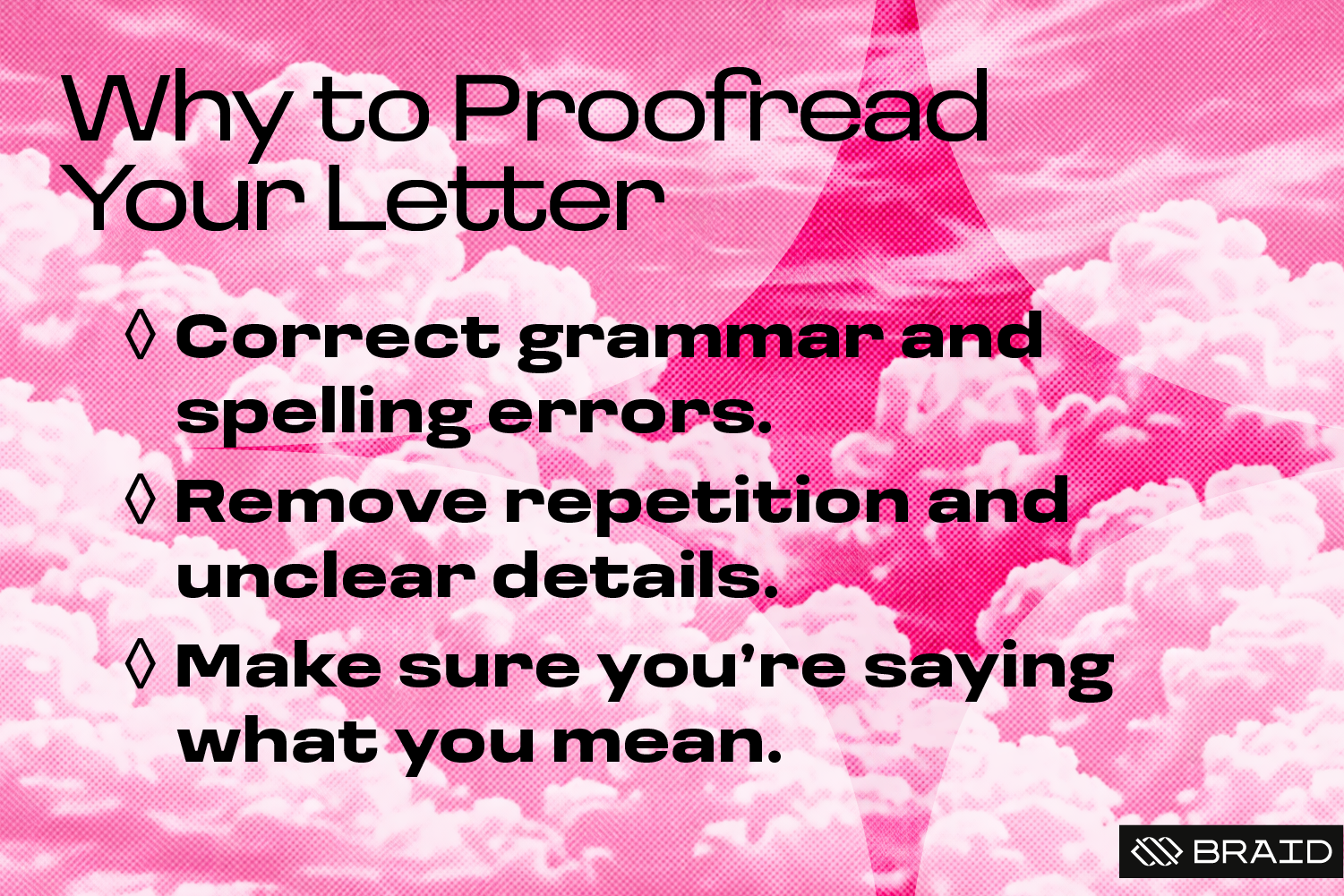
Just because you've finished writing doesn't mean your letter is finished. You owe it to your recipient to review your message for mistakes.
Errors in grammar, spelling, and punctuation undermine your message and credibility. Repetition suggests an unclear mind. And incorrect details can cause your recipient a host of inconveniences.
But most importantly, proofreading is when you ensure that you've said exactly what you meant to say. It's your chance to pause and remind yourself, "This is someone important to me. I will consider their feelings and take the time to carefully craft a message that reassures them that our relationship matters."
There you have it, Quillson—everything you ever need to know to write an acceptable letter. As you can see, there are very few components, and they're incredibly simple to master.
I'm confident you'll be able to incorporate these elements in future correspondence, and that your next letter will be imbued with the fondness I know you feel for me.
Yours,
Paloma
FREE SENTENCE REPHRASER
Download the Chrome extension to start rephrasing and refining.
FAQs
When should you write a letter instead of an email or message?
Letters are best when formality, permanence, or emotions matter. Situations like official requests, complaints, condolences, and personal milestones often call for letters because they show intentionality, seriousness, and respect in ways that faster communication doesn’t.
What information should always appear at the top of a letter?
A letter typically begins with identifying information such as the sender’s address and date. Formal letters may include the recipient’s name, title, and address. This information provides context and ensures the letter can be properly understood or responded to.
How do you decide how formal a letter should be?
Formality depends on your relationship with the recipient and the purpose of the letter. Writing to an institution or authority usually requires a formal tone, while letters to friends or family allow a more relaxed style. When in doubt, err on the side being more formal.
What makes a letter different from other types of writing?
Letters are specific to the recipient and are typically purpose-driven. Unlike essays or articles, a letter is written for a reader (or defined group), and some type of response is often expected. This makes clarity, structure, and tone more important than stylistic flourish.
How do you keep a letter focused and on topic?
Start by defining a single, main reason for writing. Each paragraph should support that purpose, whether by providing context or additional details. Removing unrelated anecdotes or repeated points helps keep the reader engaged and focused.
Are handwritten letters still appropriate today?
Yes. Handwritten letters are excellent for personal messages such as thank-you notes, condolences, apologies, or expressions of appreciation. Although personal letters are less common, they often feel more sincere and memorable than typed or digital correspondence.
How do you know a letter is ready to send?
A letter is ready when it has a clearly stated purpose, follows a logical structure, uses an appropriate tone, and contains no spelling or grammatical errors. Reading it once for clarity and accuracy helps ensure your message says exactly what you intend.
FREE SENTENCE REPHRASER
Download the Chrome extension to start rephrasing and refining.